
No products in the cart.

Optocoupler IC
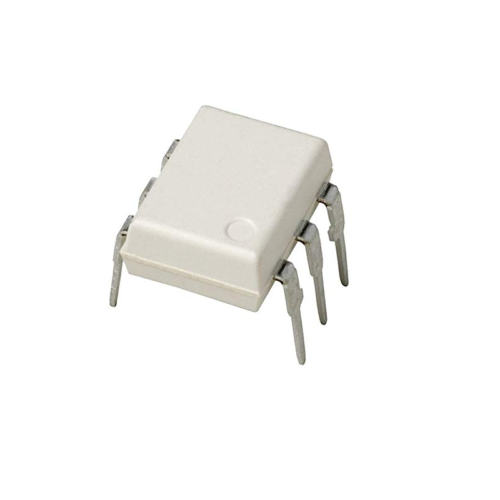
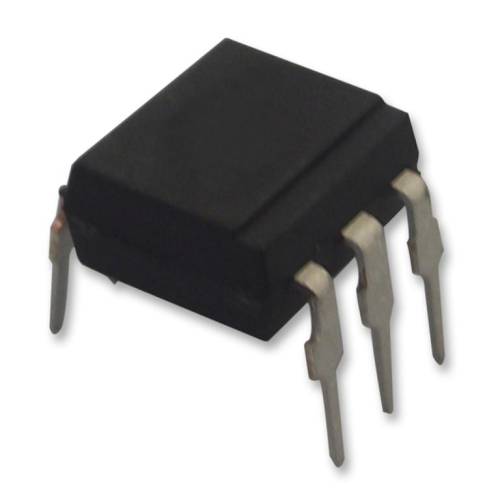
MOC3052 IC Optoisolator Triac Driver Optocoupler IC
Availability:
In stock
₹44.00 (incl. tax)
In stock
MOC3052 IC Optoisolator Triac Driver Optocoupler IC
The MOC3052 is a non–zero-cross triac driver optocoupler, designed to interface low-voltage control systems—such as microcontrollers, Arduino, Raspberry Pi, PLCs—with high-voltage AC loads.
It contains an infrared LED input and a light-activated phototriac output, providing galvanic isolation between the control circuitry and AC mains.
Because it does not have zero-cross detection, the MOC3052 can trigger a triac at any point in the AC waveform, making it perfect for:
- AC light dimming
- Motor/fan speed control
- Phase-angle controlled power systems
Compared to the MOC3051, the MOC3052 requires lower LED trigger current, making it easier to drive directly from logic circuits.
Features
- Excellent IFT Stability—IR Emitting Diode Has Low Degradation
- 600 V Peak Blocking Voltage
- Safety and Regulatory Approvals
- UL1577, 4,170 VACRMS for 1 Minute
- DIN EN/IEC60747?5?5
Specification
| Symbol | Parameter | Value | Unit |
| IF | Forward current | 60 | mA |
| PD | Power dissipation | 100 | mW |
| VR | Reverse Voltage | 6 | V |
| Tstg | Storage temperature range | -40 to +150 | °C |
| TOPR | Operating Temperature | -40 to +85 | °C |
| TSOL | Lead Solder Temperature | 260 for 10 sec | °C |
| ITSM | Peak Repetitive Surge Current (PW = 1 ms, 120 pps) | 1 | A |
| VDRM | Off-State Output Terminal Voltage | 600 | V |
Applications
- AC lamp dimmer circuits
- Fan/motor speed control
- Heater and temperature control
- Solid-state relay circuits
- Phase-angle controlled AC power systems
- Home automation AC switching
- Industrial automation and controllers
- Triggering external TRIACs (BT136, BTA16, etc.)
- PWM-to-AC control interfaces
*Product image for illustration purposes only, actual product may vary.
1 review for MOC3052 IC Optoisolator Triac Driver Optocoupler IC
Only logged in customers who have purchased this product may leave a review.




Sanjay (Verified Customer) –
Sanjay –